Common Conditions

Podiatric Surgeon and Foot & Ankle Specialist in Lake Zurich, Illinois

Home › Conditions

Common Foot and Ankle Conditions

Did you know that the human foot is actually quite complex? It’s a structure with 26 bones, 33 joints, and more than 100 ligaments and muscles. All of these parts work together to achieve a unique combination of stability and flexibility. Because we use our feet daily, it’s inevitable that problems may arise in any of these bones, joints, or ligaments.

How We Can Help

Dr. Gurrera is committed to providing our patients with the best treatment possible. We help diagnose and treat both surgical and non-surgical problems, no matter their severity. With extensive training and experience, we use proven and current diagnostic and treatment methods to ensure you heal properly and return to the activities you love.

Common Conditions

You use your feet to walk, run, jump, climb, and more, making them vulnerable to many different ailments.These can range from mild inflammation to more serious conditions such as fractures. Dr. Gurrera has extensive experience treating all types of foot and ankle issues and can help you determine the best treatment plan for your specific condition.

  • Athlete’s Foot: A fungal infection that occurs when the feet are exposed to fungus commonly found in gym showers, pools, and other barefoot areas. It usually affects the skin between the toes and can spread if untreated. Keeping feet dry and clean and using antifungal sprays, powders, or lotions can help.
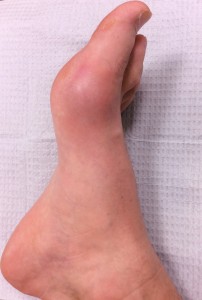
  • Bunions: A progressive deformity where a bump forms at the base of the big toe, often caused by wearing tight or narrow shoes. Since bunions worsen over time, early diagnosis and treatment from a podiatrist is essential to prevent severe pain, arthritis, and deformity.
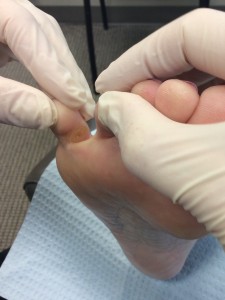
  • Ingrown Toenails: Occur when the nail grows into the skin, causing pain, redness, swelling, and infection. Triggered by improper nail trimming, tight shoes, or injury. A podiatrist can safely treat the infection and prevent recurrence.

Other Conditions

To learn more about additional foot and ankle conditions, explore the full list below. If you have any questions, our team is here to help.

Achilles Tendonitis

Achilles tendonitis is inflammation of the Achilles tendon, the largest tendon in the human body. This is generally caused by an overuse injury and is more common among athletes. Achilles tendonitis can also occur within the inactive population when other factors contribute, such as obesity, tight calf muscles and poor shoe gear. Symptoms include pain and swelling to the back of the heel and difficulty walking and participating in activities. Achilles tendonitis is generally slow to heal due to the tendon’s poor blood flow. Treatment includes rest, stretching, icing, anti-inflammatories, compression, heel lifts, immobilization, MLS Laser therapy and physical therapy. If untreated, Achilles tendonitis can lead to tears and rupture of the tendon and heel spurs. This condition can be prevented with regular exercise, stretching and warm-ups before exercise to improve strength and elasticity of the tendon.

Ankle sprains are caused by a twisting injury or force on the ankle joint, often resulting in one or more ligaments of the ankle to be stretched or torn. Ankle injuries occur commonly while playing basketball, slipping on ice, and stepping incorrectly off of a curb. If not properly treated, ankle sprains can develop into chronic conditions. Symptoms include pain, swelling and bruising to the ankle and difficulty walking and participating in activities. X-rays are always taken in the office to rule out fracture and occasionally an MRI is ordered to evaluate the extent of injury to the ankle ligaments. Treatment includes rest, icing, stretching, bracing, MLS Laser therapy, physical therapy, and anti-inflammatories.

Arthritis is a disabling and occasionally crippling disease afflicting almost 40 million Americans. In some forms, it appears to be hereditary. While the prevalence of arthritis increases with age, it can affect people of all ages. Arthritis is most common in those over the age of 50. Arthritis is inflammation and swelling of joint cartilage, generally accompanied by an increase in fluid within the joints. Treatment may include anti-inflammatories, icing, custom orthotics, braces, MLS Laser therapy, steroid injections, and surgery.

Athlete’s Foot is a fungal infection of the skin, usually occurring between the toes and in the arch of the foot. Fungus affects the feet because shoes create a warm, dark, and humid environment that encourages fungus growth. Symptoms include dry, scaly, red skin with itching, inflammation, and blisters. Fungal infections of the skin can spread to the toenails and vice versa. Treatment includes antifungal creams, ointments, and occasionally oral medication. Athlete’s foot can be prevented by proper hygiene, wearing fresh socks and shoes daily, and avoiding barefoot walking while in public areas such as pools, hotels, and gyms.

Athletes-Foot

Most blisters of the feet are caused by friction due to shoes or minor burns and do not require medical attention. New skin will form beneath the affected area and the fluid is simply absorbed or can be drained. Do not remove the overlying skin since this acts as a barrier to bacteria. You can soothe blisters with vitamin E ointment or an aloe-based cream. If blisters persist or appear infected, please call to make an appointment right away.

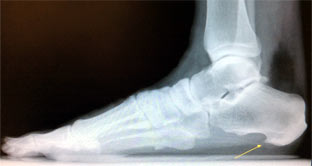
A bone spur is an overgrowth of bone as a result of joint arthritis, trauma, or stress to a ligament or tendon. The growth can cause pain, swelling, and/or restrict joint motion, depending upon the location and size of the spur. Within the foot, spurs are most commonly found on the heel bone due to plantar fasciitis or Achilles tendonitis and within the great toe joint. Your podiatrist will take x-rays to evaluate and determine the best treatment option.

foot-xray

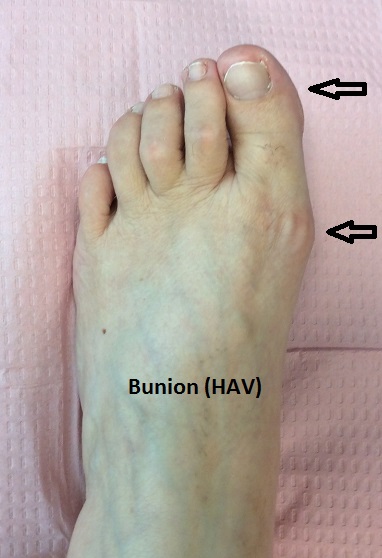
Bunions are a progressive deformity that results from mechanical imbalance and undue stress on the big toe joint. This leads to a bony prominence to the inside of the toe joint and drifting of the great toe causing crowding to the smaller toes. Contrary to popular belief, bunions are aggravated, not caused, by shoes. Bunions are usually an inherited deformity of the foot. Bunions more commonly affect women due to wearing high-heeled or pointed-toed shoes which aggravate the condition. Symptoms include pain at the great toe joint, swelling, redness, corns, calluses, and difficulty wearing shoes. Because bunions are progressive, it is best to see a podiatrist for diagnosis and treatment to correct the problem before severe pain, arthritis, and deformity occur.


Bunion

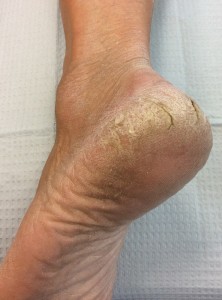
A callus is an area of hard, thickened skin that can occur across the ball of the foot, on the heel, or on the bottom of the big toe. Calluses are caused by pressure and friction to the skin due to deformities of the foot such as bunions, hammertoes, tailors bunions, and high arched foot. Calluses are routinely trimmed by a podiatrist, but do reoccur. To prevent reoccurrence of painful calluses, you and your podiatrist may decide on surgical treatment to correct the foot deformities causing the calluses. They can also be treated with custom orthotics to pad and take pressure off of calluses.

calluses

A corn is an area of hard, thickened skin that forms on the top or sides of the toes. The surface layer of the skin thickens, irritating the tissues beneath. Corns are caused by rubbing between the toes or to the inside of shoes due to hammer toe deformities. Corns are routinely trimmed by a podiatrist, but do reoccur. To prevent reoccurrence of painful corns, you and your podiatrist may decide on surgical treatment to correct the foot deformity causing the corns.

Corns

Cysts are benign fluid filled masses found under the skin. Common cysts of the feet are known as synovial, ganglion, or mucoid cysts. They can form within or around tendons and joints. These cysts are filled with synovial fluid that has leaked from nearby joints or tendons. These cysts can be drained in the office, but do commonly reoccur. X-rays or MRI may be taken to evaluate the cause of the cyst. If they persist and are symptomatic, they can be removed surgically. If the cyst is not symptomatic it does not require treatment.

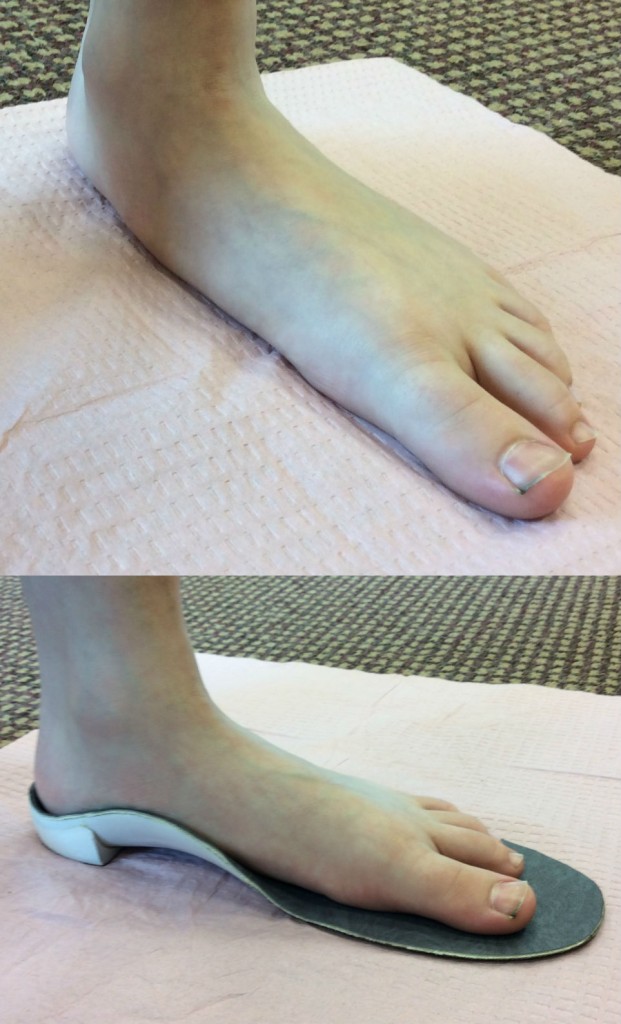
Flat feet have excessive pronation, lower than normal or even non-existent arches. This can cause further foot problems, evenleading to disability with advancing age and increased inactivity. Flat feet are most commonly a hereditary condition. Symptoms may include pain to the foot and ankle, clumsiness, and
difficulty wearing shoes. Flatfeet are usually first treated with custom orthotics for arch support and to hold the feet in a healthy position. If orthotics do not provide pain relief and improved function then surgical treatment options are discussed.

Flat Feet or Fallen Arches

Foot odor is caused by the interaction between your perspiration/sweat and the bacteria that thrives in your shoes and socks. Therefore, any attempt to reduce foot odor has to address both your sweating and your footwear. Odor can also be caused by an inherited condition called hyperhidrosis, or excessive sweating, which primarily affects men. Stress, medications, fluid intake and hormonal changes can also increase the amount of perspiration your body produces. Treatments include foot powders, foot soak tablets, avoiding prolonged use of wet socks, and wearing specific moisture-wicking socks. Alternate between shoes, so they have 24 hours to air dry.

Athlete’s foot and fungal nails are the most common types of fungal infections of the foot. The fungus usually attacks the feet because shoes create a warm, dark, and humid environment which encourages fungal growth. The warmth and dampness of areas around swimming pools, showers, and locker rooms, are also breeding grounds for fungus. Other conditions, such as reaction to dyes or adhesives in shoes, eczema, and psoriasis, may mimic Athlete’s foot. Fungal infections are treated with topical and/or oral antifungal medications, laser treatment, and good daily foot hygiene.

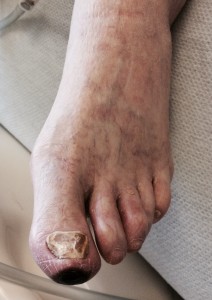
Gangrene is a potential life-threatening condition caused by critically insufficient blood supply to the foot (necrosis). Injury and infections can also lead to gangrene when there is poor blood flow. Long term smoking and those with diabetes are more prone to foot gangrene. Gangrene may be treated with hospitalization, revascularization procedures, wound care, antibiotics, hyperbaric oxygen therapy, and amputation.


Gangrene

Gout is a form of arthritis caused by a buildup of uric acid, a normal byproduct of the diet, in the joints. The great toe joint and ankle joint are commonly affected areas. Attacks of gouty arthritis are extremely painful, perhaps more so than any other form of arthritis. Men are much more likely to be afflicted than women. Research suggests that diets heavy in red meat, rich sauces, shellfish, and alcohol are associated with gout. However, other protein compounds in foods such as lentils and beans may play a role. Symptoms include severe joint pain, redness, and swelling. Gout can be treated with steroid injections, anti-inflammatories, oral steroids, icing, elevating, and limiting activity.

Gout

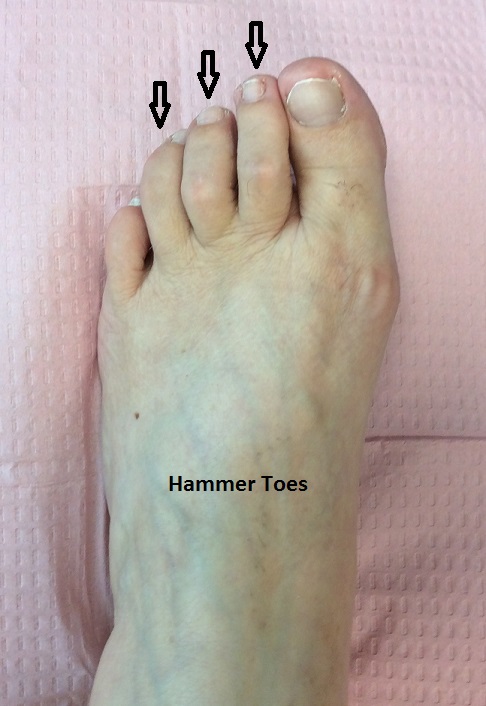
Hammertoes are deformities of the smaller toes of the foot. The middle joint of the toe is bent, resembling a hammer. Hammertoes can cause thickened toenails and corns or calluses on the top of the toe or at the tip of the toe. If diabetic, these corns and calluses can lead to ulceration (sores) and infection. Pain may be experienced to the toes or the ball of the foot. Many people with hammer toes have difficulty finding comfortable shoes. Hammertoes can become painful and rigid or inflexible and require surgical correction.

Hammer-Toe

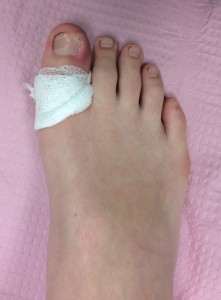
Ingrown toe nails have borders or sides that dig painfully into the skin, often causing infection. They are frequently caused by improper nail trimming, but can also be caused by shoe pressure, injury, fungal infection, and poor foot structure. Infected ingrown toe nails are trimmed and drained under sterile technique with local anesthesia (injections) in the office. If the ingrown toenail is chronic or reoccurring, then a permanent removal of the offending nail border can be performed while keeping the rest of the nail intact.

Ingrown-Toenail

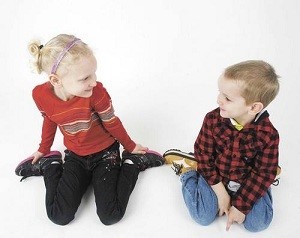
Intoed gait (walking pattern) is when the feet turn inward when walking or running. This is caused by abnormal rotation of the legs or hips. Young children normally outgrow this condition, but some require treatment to correct the deformity. Special braces and shoes may be prescribed by your physician. Parents should prevent their children from sitting in the W-shaped position.

intoed-gait

A neuroma is inflammation and thickening of a nerve within the foot, most commonly between the third and fourth toes (Morton’s Neuroma). They are caused by pressure and irritation to a nerve from poorly-fitting shoes, repetitive trauma or abnormal bone structure. Most neuromas are healed with steroid injections, icing, MLS Laser Therapy, and/or alcohol sclerosing injections. These treatments decrease pain and inflammation to the neuroma. Custom orthotics are prescribed to offload the painful area and prevent reoccurrence. If these treatments fail, then surgical removal of the neuroma is sometimes necessary.

Peripheral neuropathy is a disease of the nerves within the extremities. It causes loss of the protective sensation to the feet (numbness); including pain, heat, cold, sharpness, and vibration. Ironically, neuropathy can also cause burning, tingling, and shooting pains. This is most commonly due to diabetes, but can also be caused by medications, genetic disease, exposure to heavy metals, trauma, chemotherapy, vitamin deficiency, and more. There are several treatments available for neuropathy depending on cause and symptoms. These include pain creams, medications that act on the nervous system, vitamin B complex supplement, electric nerve stimulation, laser therapy, and blood sugar control.

Plantar fasciitis is a very common condition that causes heel pain. It often occurs with the first steps out of bed or after sitting for extended periods, but can also affect people during their daily activities and sports. The pain can be described as achy, pulling, sharp and/or stabbing. This is due to tightness and inflammation of the plantar fascia, a thick band of tissue across the bottom of the foot. A heel spur may or may not be present and is rarely the source of the pain. This tightness can be caused by flat feet, high arches, obesity, unsupportive shoes, tight calf muscles, fat-pad atrophy, and/or repetitive micro-trauma. The majority of patients with plantar fasciitis improve with conservative (non-surgical) treatment. This includes stretching, rest, appropriate shoe gear, icing, anti-inflammatories, orthotics, avoiding barefoot walking, night splints, steroid injections, MLS Laser therapy, and/or physical therapy.

Sesamoiditis is inflammation and pain to the small, round bones (sesamoids) under the great toe joint, on the ball of the foot. This can be caused by repetitive forces (running), weight gain, and trauma. Treatments include off-loading the painful area with a well-padded surgical shoe or boot, icing, anti-inflammatories, and steroid injections. Once healed, custom orthotic and proper shoe selection may be necessary to prevent reoccurrence. If the sesamoid bone is found to be fractured on x-ray, often times healing does not occur due to the poor circulation to these small bones and surgical excision/removal of the bone is necessary.

Shin splints are pain on either side of the leg bone caused by muscle or tendon inflammation due to over use. It is commonly related to an increase in exercise intensity, excessive foot pronation (collapsing arch), muscle imbalance between opposing muscle groups in the leg, running on different surfaces, and worn out shoes. Treatment includes rest, stretching, icing, anti-inflammatories, and massage. Proper stretching, appropriate shoe gear, and corrective orthotics (shoe inserts) can help prevent shin splints.

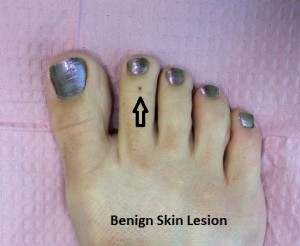
Benign-Skin-Lesion

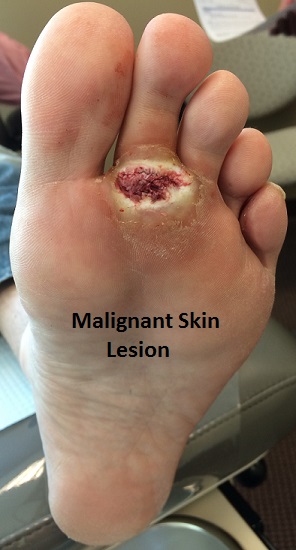
Skin lesions are areas of skin that are different from the surrounding skin. Most skin lesions are benign, such as freckles, moles, pimples, blisters, and rashes.  But, it is critical to detect malignant skin lesions, such as malignant melanoma, the deadliest form of skin cancer. The ABCDEs is a strategy for early recognition.

A- Benign lesions are symmetrical, malignant lesions are asymmetrical.
B- Benign lesions have even, smooth borders. Malignant lesions have irregular borders.
C- Benign lesions are usually one color. Malignant lesions have a variety of colors and shades.
D- Benign lesions are usually smaller and malignant lesions are larger.
E- Benign lesions appear the same after time. Malignant lesions change in size, shape, color, elevation, or any other trait. Any new symptom such as bleeding, itching or crusting point to danger.

Malignant-Skin-Lesion

Stress fractures are incomplete cracks in the bone caused by repetitive forces or overuse. Metatarsals are the most common bones in the foot to be fractured. Stress fractures are more prevalent in women and are also associated with poor shoe gear and increased weight and age. Although stress fractures are not complete breaks within the bone, they can be painful and debilitating. Treatment includes rest, icing, anti-inflammatories, compression, and splinting the foot with a surgical shoe or boot. Wearing appropriate shoes for specific activities with quality materials and cushion helps to prevent this condition. Stress fractures left untreated may become complete fractures, which require casting, immobilization, and possible surgical repair.


Swelling of the feet, ankles and legs, also called edema, is often caused by an abnormal build-up of fluids within the tissues of the lower extremities. Swelling of the feet and ankles is a common problem, particularly in the elderly population. It may be painful and cause ulcers (sores) or be asymptomatic. Because of the effect of gravity, swelling is particularly noticeable in the feet and lower legs. Swelling can be due to many conditions such as: poor circulation, DVT (deep vein thrombosis or clot), injury, pregnancy, lymphedema (blockage of the lymph system), medications, sitting or standing for long periods of time (airline flights), kidney disease, and cardiac disease. Treatment may include compression dressings, elevation, medications, wound care, and revascularization procedures.

Tailors-bunion

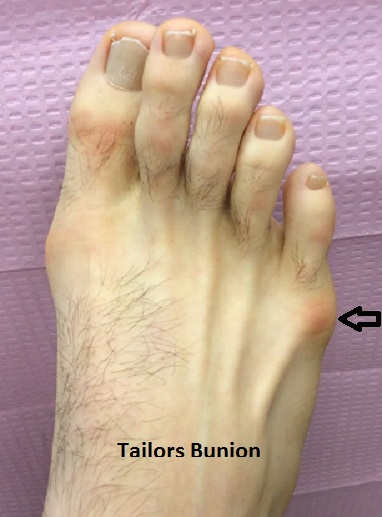
A tailors bunion is a progressive deformity that results from mechanical imbalance and undue stress on the fifth toe (baby toe) joint. This leads to a bony prominence to the outside of the toe joint and drifting of the toe below or above the fourth toe. Contrary to popular belief, bunions are aggravated, not caused, by shoes. Bunions are usually an inherited deformity of the foot. Bunions more commonly affect women due to wearing high-heeled or pointed-toed shoes which aggravate the condition. Symptoms include pain at the fifth toe joint, swelling, redness, corns, calluses, and difficulty wearing shoes due to the increased width of the foot. Because tailors bunions are progressive, it is best to see a podiatrist for diagnosis and treatment to correct the problem before severe pain, arthritis, and deformity occur.

Ulcer

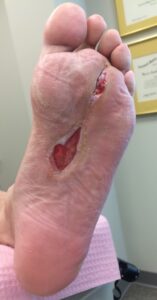
Ulcers are open skin wounds. Ulcers can be found on the feet and legs. They are most common with the diabetic population and those with vascular disease. Ulcers can be very slow to heal due to poor circulation, infection, pressure, increased blood sugars, poor nutrition, and neuropathy (nerve disease). With lack of sensation, something as simple as a splinter or cut on the bottom of the foot can turn into a serious health problem, such as bone infection, sepsis, and amputation. The most important part of treatment is off-loading or taking pressure and weight off of the ulcer. Treatment may also include wound cleaning and debridement (trimming away dead tissue), antibiotics, blood sugar control, hospitalization, consultation with a vascular specialist, and advanced wound care products such as grafts, growth factors, collagen, and negative pressure therapy. Those diagnosed with diabetes or vascular disease should have regular exams and routine foot care by their podiatrist to prevent ulcerations, infections, and amputations. Routine foot care includes examination of the lower extremities, foot care and hygiene education, and trimming of nails and calluses.
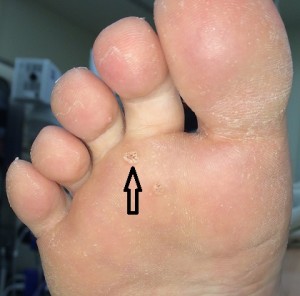
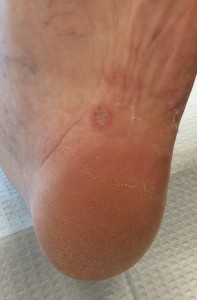
Warts are benign skin lesions due to a viral infection, known as the Human Papilloma Virus (HPV). This generally invades the skin through small cuts and abrasions. They can be painful and are often mistaken for corns or calluses. They can appear anywhere on the skin, but are commonly found on the bottom of the foot (plantar warts). They may be treated with liquid acids, plasters of acid, freezing, vitamins, medications, injections, and laser removal. The greatest success rate is found with laser removal of warts. Approximately 50% of warts may resolve without treatment over a two year period, however, treatment is recommended to prevent spread of the infection to the foot and other people.

We invite you to call our office with any questions or to schedule an appointment.